

Biogramy – Biographies of scientists
Osoby współtworzące kierunek Leki Biologiczne:
Prof. dr hab. Andrzej Dziembowski
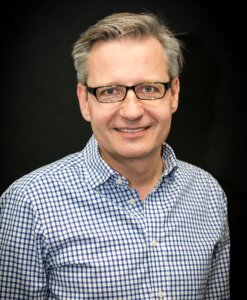 Prof. Andrzej Dziembowski is the Head of the Laboratory of RNA Biology at the International Institute of Molecular and Cell Biology (IIMCB) in Warsaw and a professor at the University of Warsaw. Born in 1974, Prof. Dziembowski is a molecular biologist, biochemist, and geneticist. He earned both his undergraduate and doctoral degrees from the Faculty of Biology at the University of Warsaw, where he continues to lecture. He spent several years at the CNRS Centre for Molecular Genetics in Gif-sur-Yvette, France, before leading an independent laboratory at the Institute of Biochemistry and Biophysics of the Polish Academy of Sciences in Warsaw. Since 2019, Prof. Dziembowski has served as the ERA Chairs group leader at IIMCB. He has published extensively in leading scientific journals, including Nature, Cell, Nature Structural & Molecular Biology, Nature Communications, Genes & Development, Molecular Cell, EMBO Journal, and EMBO Reports. He is therecipient of numerous p restigious research grants, including ERC StG and ERC AdG.His research focuses on the post-transcriptional regulation of gene expression in metazoans, particularly the mechanisms of turnover of both endogenous and therapeutic mRNAs. To achieve a comprehensive understanding of these processes, his group combines functional studies using transgenic animal models (mouse and C. elegans) with advanced transcriptomic and biochemical techniques.
Lab website: https://www.iimcb.gov.pl/en/research/41-laboratory-of-rna-biology-era-chairs-group#tab2
ORCID: https://orcid.org/0000-0001-8492-7572
G. scholar profile: https://scholar.google.pl/citations?hl=pl&user=WIiYfl0AAAAJ&view_op=list_works
Prof. dr hab. Jacek Jemielity
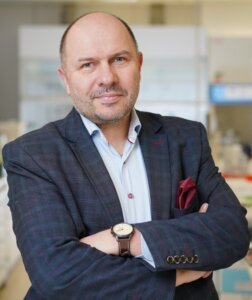 Prof. Jacek Jemielity is a chemist specializing in chemically modified mRNA. Since 2024, he has been Director of the Centre of New Technologies at the University of Warsaw, where he leads the Laboratory of Biological Chemistry. He has supervised 13 PhD theses and mentored 17 postdoctoral fellows. He is co-founder and President of ExploRNA Therapeutics. He has led projects funded by the National Science Centre, Foundation for Polish Science, and the Bill & Melinda Gates Foundation. He has co-authored over 150 publications (over 4,000 citations, h-index 37) and is an inventor on 14 patents (licensed by BioNTech and ExploRNA). His mRNA modification technologies are used in multiple clinical trials. He has received numerous awards, including the Foundation for Polish Science Prize and the Economic Award of the President of Poland, and was nominated for the European Inventor Award. Since 2024, he serves as Vice-Chairman of the FNP Council.
G. scholar profile:
https://scholar.google.com/citations?hl=pl&user 5tMsnPAAAAAJ&view_op=list_work
ORCID: https://orcid.org/0000-0001-7633-788X
Dr hab. Seweryn Mroczek prof. ucz.
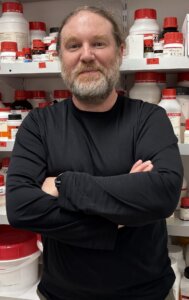 Dr Seweryn Mroczek is an Assistant Professor at the University of Warsaw and a Staff Scientist at the International Institute of Molecular and Cell Biology (IIMCB). His research focuses on the post transcriptional regulation of gene expression in metazoans, particularly the turnover mechanisms of endogenous and therapeutic mRNA. To gain insight into these processes, he combines functional studies using various biological models — primarily transgenic animal models — with cutting-edge molecular biology techniques. He has published in several leading scientific journals, including Nature, Nature Communications, Science Advances, Genes & Development, NAR, or the EMBO Journal. He has been awarded the START Fellowship from the Foundation for Polish Science and the Scholarship for Outstanding Young Scientists from the Polish Ministry of Science and Higher Education.
ORCID: https://orcid.org/0000-0001-5026-1741
Dr hab. Joanna Kowalska
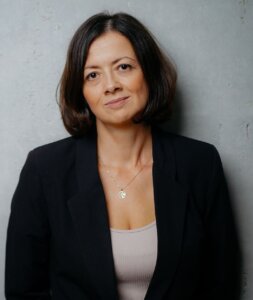 Joanna Kowalska, Ph.D., D.Sc. is a nucleic acids chemist and biophysicist, who works as an assistant professor and group leader at the University of Warsaw. She received her PhD and habilitation degrees from the University of Warsaw in 2020 and 2019, respectively. She currently heads the Laboratory of Biophysical Chemistry at the Faculty of Physics, Division of Biophysics (UW). Her team conducts interdisciplinary research to develop molecular tools based on nucleotides, oligonucleotides, and nucleic acids, and applies them in biophysical and biochemical studies, as well as experimental therapies. The most recent scientific interests include RNA-based fluorescent molecular probes, modifications of mRNA ends, and the chemical circularization of RNA. She co-authored more than 90 scientific papers cited 4000+ times and 10 patent families, many of which have already been commercialized. She has received many national and international awards, including a nomination for the final round of the European Inventor Award in 2018. She is also co-founder and Chief Technology Officer of ExploRNA Therapeutics – a spin-off company of the University of Warsaw, which aims to develop new reagents for mRNA modifications and mRNA-based therapies.
G. scholar profile: https://scholar.google.com/citations?hl=en&user=zfCwzDwAAAAJ&view_op=list_works&sortby=pubdate
Research group: https://chembiobiochem.com/
Dr Tomasz Stanisław-Kamiński
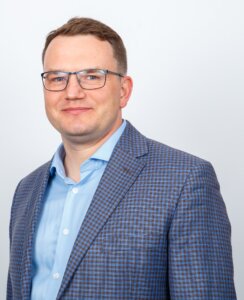 Dr Tomasz Kamiński is a group leader at the Faculty of Biology, University of Warsaw. His research focuses on developing microfluidic technologies for ultra-high-throughput screening and single-cell genomics. He earned his degree in biotechnology from the Warsaw University of Life Sciences in 2010 and next completed his Ph.D. in Prof. Piotr Garstecki’s research group at the Institute of Physical Chemistry, Polish Academy of Sciences, in Warsaw. From 2018 to 2020, he was a Marie Skłodowska-Curie Postdoctoral Fellow in Prof. Florian Hollfelder’s group at the Department of Biochemistry, University of Cambridge, UK. A few years ago, he returned to Poland to establish his own research group. Dr. Kamiński is the co-author of 36 research articles and four book chapters and co-inventor of 12 patents and 17 patent applications. He is also a co-founder of Evoralis, a Cambridge-based spin-off, where he currently serves as a scientific advisor. Previously, he also worked as a consultant for Scope Fluidics and Curiosity Diagnostics for several years. His contributions to research and entrepreneurship have earned him numerous prestigious awards, including the START Fellowship from the Foundation for Polish Science, the ETIUDA Doctoral Scholarship from the National Science Centre, inclusion in the Forbes 30 Under 30 Europe list (Science and Healthcare category), and the Scholarship for Outstanding Young Scientists awarded by the Polish Ministry of Science and Higher Education.
Lab website: https://microfluidics.biol.uw.edu.pl/
ORCID: https://orcid.org/0000-0001-5124-4548
Dr Marcin Magnus
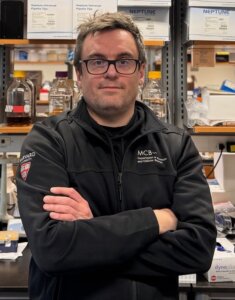
Marcin Magnus is a computational RNA biologist specializing in RNA structure modeling. His research aims to understand the evolution and roles of RNA and ribonucleoprotein complexes in biological systems by combining computational approaches, including machine learning, molecular dynamics, and structure prediction, with experimental methods such as yeast genetics and molecular biology. He seeks to codify this knowledge into predictive computational models applicable to future RNA therapeutics.He obtained his PhD in RNA Bioinformatics at the International Institute of Molecular and Cell Biology (IIMCB) in Warsaw with Dr. Janusz Bujnicki, in part at Stanford University with Dr. Rhiju Das. During his first postdoctoral research at the University of Warsaw with Dr. Magda Konarska, he studied the spliceosome, the most complex RNA-based molecular machine, by combining experimental techniques with computational analysis. Currently, he is conducting research at Harvard University with Dr. Elena Rivas, where he works at the interface of structural bioinformatics, artificial intelligence, and molecular biology. He is preparing to establish an independent research group in Europe. He will head the Laboratory of RNA Design and Therapeutics at the Centre of New Technologies, University of Warsaw, where his group will focus on computational RNA design, RNA therapeutics, and the integration of artificial intelligence–based methods with experimental validation.
G. scholar profile: https://scholar.google.com/citations?user=O2gLO2EAAAAJ&hl=en